Parks.it Homepage
Local Banner for the promotion of the territory

Points of Interest


Capannella Woodland

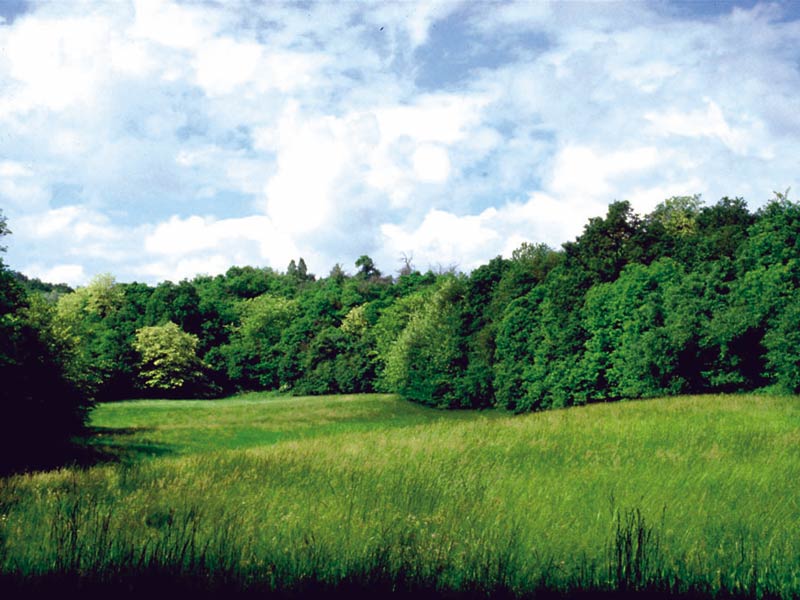
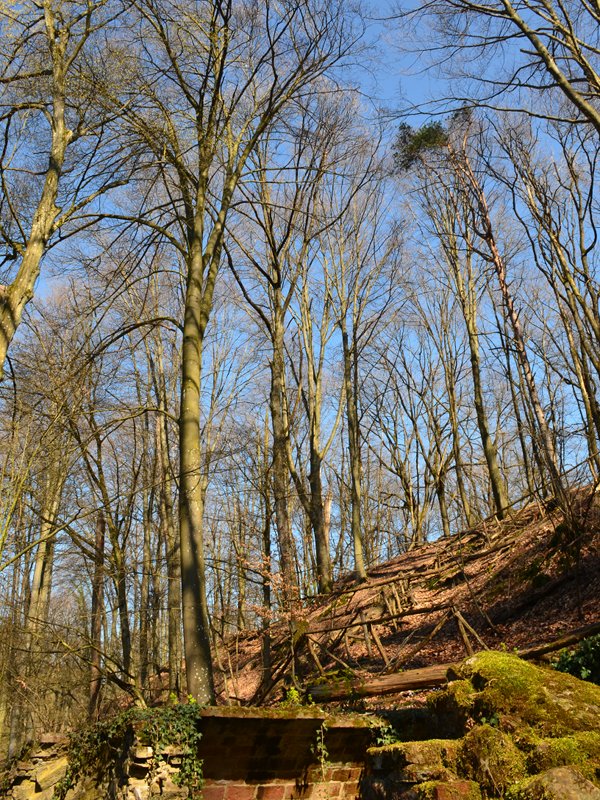
Capannella woodland is a charming wood situated on the right slope of the valley of Rio delle Basse, which borders the municipal road leading to Collecchio, the so-called "Strada del Conventino". The itinerary, which can be freely gone through, is interesting above all for its historical and naturalistic aspects; it is the most known and gone through by visitors, on foot, with the horse, or by bike.
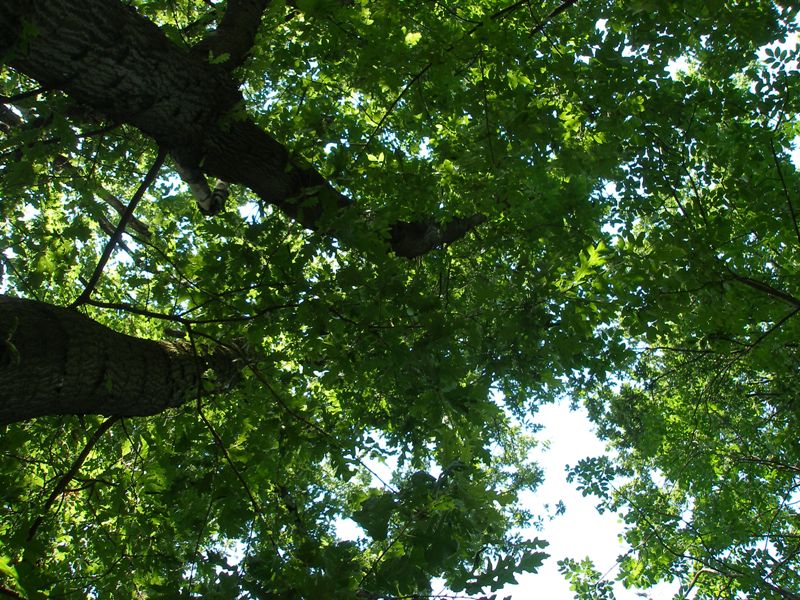
The walk mainly develops on a plateau dominated by Turkey oaks and by chestnut trees alternating with wide grasslands. You can also find flowering ash trees, wild service trees, hop hornbeams and some rare oriental hornbeams. In the thick coat of shrubs there are hawthorns, privets, and hazelnut trees.
The wood witnesses the importance of the hunting tradition characterizing the whole area since the period in which the Sanvitale family dominated it, before the arrival of the Farnese family. As a matter of fact, within the wood you will find the "star", the point where the ancient hunting paths met, and which is typical of the royal hunting reserves. At the half of the 18th century a cabin called "capannella" was built in the middle of it: it was the meeting place for hunters, who maintained the tradition until the first decades of the last century.


The Fruit Chestnut Grove

A small part of vegetable covering of the Park consists of chestnut groves planted here at the end of the 18th century, when the chestnut flour was an essential element of the human diet.
The presence of the chestnut grove is an important historical evidence linked to the landscape evolution and to the exploitation of the resource 'wood'. If once it was widespread, nowadays it covers less than 1% of the surface of the protected area covered with wood. The causes of this rarefaction lie in the diffusion of two serious plant illnesses and in the transformation of the rural economy. Great part of the chestnut grove of the past has been abandoned or transformed into coppice wood which has the trend to regress and to transform itself into spontaneous wood. The fruit chestnut grove situated near R. Levati Park Center is worth a visit, since it has been recently subject to interventions of recovery (thinning out of the undergrowth, pruning, and grafting with local varieties) aimed at managing the wood according to the local tradition.
The area will be completed with two informative notice boards with ecological, naturalistic, and historical-cultural news.


Casinetto
Casinetto
 

Casino dei Boschi

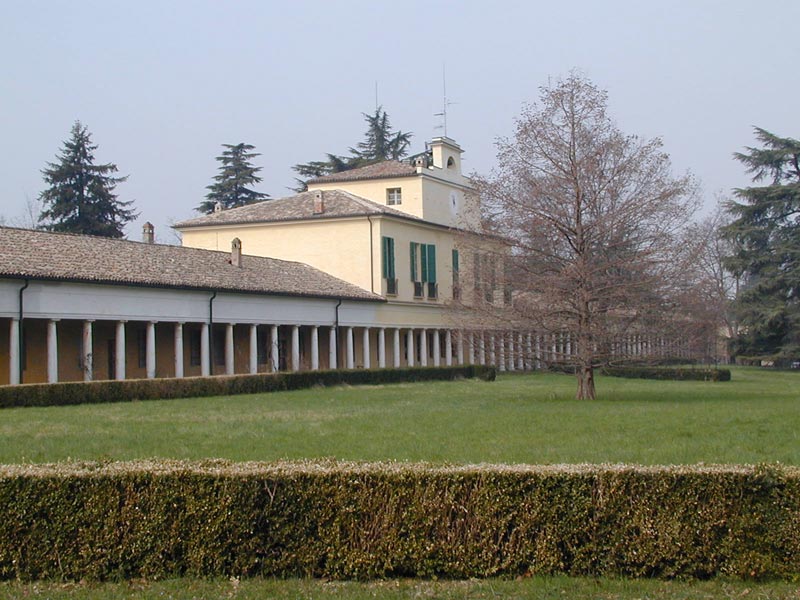
Semi-concealed by an imposing cedar path, you will find the Casino dei Boschi. This wonderful structure was built between 1775 and 1789 by the Duchess Maria Amalia di Borbone who entrusted the architect Petitot with the building on a pre-existing hunting chalet. The structure was initially thought as a villa-farmstead: with a square plan, it consisted of two floors with a central turret; the main façade was characterized by a triple open gallery facing a square courtyard. The building was completed by a chapel and some service premises. In 1819 Maria Luigia from Austria, the new Duchess of Parma, bought the villa and the annexed estate, where she brought considerable changes. The architect Bettoli, who was entrusted with the restructuring, carried it out according to the Neoclassical style (abolition of the central turret, building of a central pediment and of a column prostyle above which there was a terrace). The most significant change consisted of adding next to the villa a very long colonnade which was formed by columns coming from the royal palace of Colorno and known as the "Prolunga", from which you entered the service premises. In the middle of the colonnade the CASINETTO was placed, a building with clock and bell tower, which housed the court theater.
According to the will of Maria Luigia, the court gardener Barvitius, between 1820 and 1830, created an elegant English garden as ornament to the villa. This Monumental Park was thought to harmoniously adapt itself to the shape of the wood. As a matter of fact, the vegetation was placed considering the color of the foliage in the different seasons, the nature of the branches, and the light. Some exotic species were planted and sinuous avenues were created.
In 1870 the Casino dei Boschi and the park passed from being property of the Italian Kingdom to the Eng. Grattoni; when he died, the current owners, the Princes Carrega, bought them. The Garden is made above all of evergreens; it houses fir trees (Greek firs, Caucasian firs, Douglas firs), Port-Orford Cedars, thujas, cedars of different species mixing up with huge plane trees, holm oaks, and yews. Moreover, it preserves some monumental specimens, among which a huge yew and a sequoia near the Casino.
Thanks to an agreement with the owners, the Monumental Park is open to the public. The villa cannot be visited during the winter, while the garden can be visited through a guided excursion, on foot or by carriage. The wonderful complex also houses several entertainment and cultural events, like theatrical performances, concerts, and walks: further occasions to admire the beauty of this place.


Villa del Ferlaro

Not far from Casino dei Boschi there is Villa del Ferlaro, where you arrive after going along a charming avenue of monumental cedars which linked in the past the ancient ducal residences one to the other. In 1827 Maria Luigia from Austria, Duchess of Parma, added to her estates of Sala the woods of Montetinto Montecoppe and the estate owned by Fedolfi. She entrusted the architect Gazzola with the transformation of the pre-exisiting hunting lodge which would be given to the Duchess' children. From that moment it was called "Villa del Ferlaro": the name comes from a figure similar to a crutch (in the dialect "ferla") which was drawn in the north of the building with the confluence of Rio Valline in the Manubiola. After the re-elaboration, "the building lost its primitive features of hunting lodge and became a neoclassical villa". Although great part of the central body corresponded to the primitive area, the building was enlarged according to a scheme which was very similar to the one used by Palladio.
The villa, which then passed from owner to owner, was subject to changes in its interiors, while its exterior part still presents the 19th century architectonic lines. Like Casino dei Boschi, it is surrounded by an English Garden rich in exotic essences and created by Barvitius between 1827 and 1332. It has preserved its original drawing, with wide and sinuous avenues and groups of centuries-old conifers. Today the house is private property, and cannot be visited inside. The itinerary suggested by the Park develops along Viale dei Cedri and gets near the Villa. From here, along a wide carriage road, you can get to Lago dei Pini and to the agricultural area of Montecoppe. Tours by carriage for organized groups are organized.


Pieve di Talignano

It is situated along the ridge separating the valley of the river Taro from the one of the stream Scodogna. The Pieve, a characteristic example of Romanesque architecture, dates back to the 13th century. With a rectangular plan, it has one semicircular apse and a square bell tower on the left side; the façade, the bas-relief of the Psicostasi enriching the portal lunette and the mullioned window above it are characteristic Romanesque elements. The bas-relief is ascribed to the "rural" school of the Antelami: it represents S. Michael discussing with Satan about the souls and their merits.
The church, built by the Cistercian Monks of the Rocchetta, is dedicated to San Biagio, Bishop and Martyr. The Pieve was built along one of the most important ways of the medieval pilgrimage: the Romea road. According to the tradition, exactly in Talignano (which once was Taloniano), the Via Romea had a detour used in the rainy periods: from Collecchio, after passing the Scodogna, it went subsequently uphill towards Segalara and then continued along the ridge towards Ozzano Taro. The church of Talignano is the destination of a path dedicated to the ancient stretch of the Via Romea, mapped by CAI in collaboration with Boschi di Carrega Park. The itinerary leaves from the Bosco della Capannella (situated on the right slope of Rio delle Basse) and continues towards the Laghi della Svizzera and della Grotta to get to R. Levati Visitor Center. After going through the fruit chestnut grove, the itinerary reaches the Pieve. In the Park surroundings, there are several evidences left by the medieval pilgrimage ways:

  • in Sala Baganza, the "Capela de Sala", recorded in 1230 in the tithes parchment and the Tower of San Lorenzo, transformed into Fortress in 1477 by Gilberto III San Vitale;
  • in Maiatico, the Chapel and the xenodochio of S. Nicolò;
  • in Vizzola, the Chapel of S. Giovanni Battista;
  • in San Vitale Baganza, the Church of S. Vitale which in 1230 had jurisdiction.


Sala Baganza Fortress

The place name "Sala" (indicating in Longobard a noble residence) was used for the first time in 995, while "Baganza" was added according to a Royal decree of 5th October 1862. We know something about a "castellum de Sala" in 1254 when Teseo or Tedisio Sanvitale, thanks to the marriage with Adelmota Cornazani became the landlord. In 1477 Gilberto III Sanvitale obtained from the Duke of Milan Gian Galeazzo Sforza the authorization to enlarge its "palatium" and transformed it into a four-sided strong-hold defended by a large ditch. Gilberto IV, Barbara Sanseverino's husband, between 1564 and 1578 entrusted the decoration of the western stretch of the noble floor with Aenea's history, the triumph of the Cross, Caesars' portraits, and the labors of Hercules. Passed to the Farnese family in 1612, the Rocca di Sala was chosen in 1723 as the residence of Antonio Farnese who entrusted Sebastiano Galeotti with the frescoes with mythological-allegorical subjects. With the arrival of the Napoleonic French the Rocca and the estates around it were given to Michele Varron who in 1823 demolishes the southern, eastern, and western wings, giving the Rocca its current aspect. The ownership will pass then to the Carrega, Magnani, Romani and finally (1987) in part to the Municipality of Sala Baganza. Inside the Rocca there is an Oratory, a neoclassical single-arc temple set in the north-western end of the building. It was built, according to the project by the Architect Luigi Feneulle, between 1793 and 1795, according to the will of the Duke Ferdinando di Borbone. The short distance between the Park and the Center of Sala Baganza, where the Rocca lies, suggests to visit both of them.


The Lakes

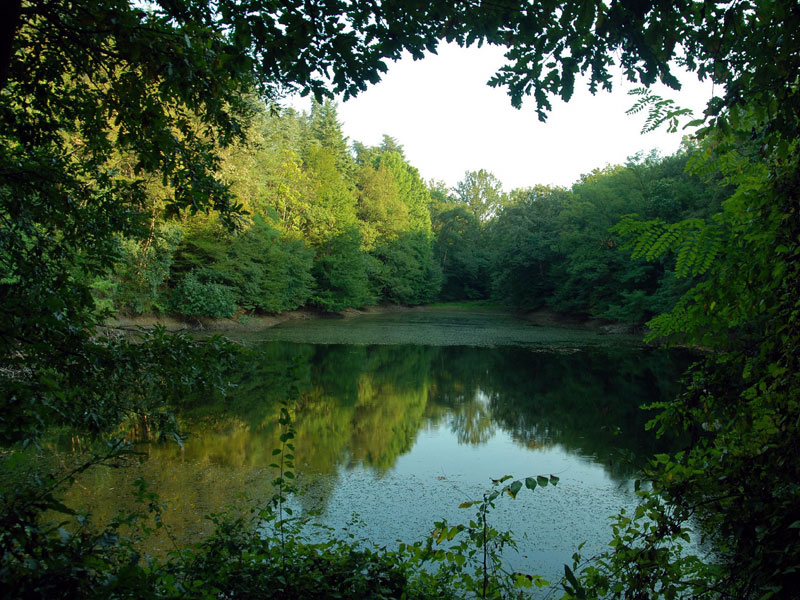
The peacefulness and the beauty of Boschi di Carrega are enriched by the presence of small stretches of water surrounded by monumental trees. They are eight lakes, each one with its own features and peculiarities. They are all artificial lakes, except one, and they were built by the Carrega family, the last owners of the Park, with the barring of small watercourses both for irrigation purposes and to enrich the variety of the landscape.

Lago della navetta is a basin dating back to the previous century which was built with irrigation purposes through barring the homonymous stream with an embankment. The environment has been enriched with several exotic essences; in particular, on the shores of the southern end of the lake, there are big specimens of Baldcypress. It is a tree usually growing in the marshy lands of the South of the United States: you can easily recognize it for its aerial roots outcropping from the soil and from the water.
The lake is populated by a particular fauna: as a matter of fact, here the rare European pond turtle (Emys orbicularis) lives. Although it was rather widespread in the past, this species is already extinct in many Italian regions because of the deterioration of the natural habitat and of the competition with non-autochthonous species. For this reason, the Direction of the Park has recently started the Project Emys, aimed at the safeguard of the population living within its territory.
The suggested itinerary develops within the Carrega property, it can thus be carried out only with a Park's Guide. You will enter the woods surrounding the lake by bordering a meadow, along which there is a beautiful row of white mulberries. This row is particularly charming in autumn, when the golden yellow foliage shows up among the green meadow and the ripe colors of the surrounding woods. The path is dominated by huge specimens of oaks, among which some wonderful sessile oaks stand out. By going along the sheet of water, you reach the southern end. From here, you can also follow the homonymous rio for a brief stretch (duration: 2 hours).

You can reach Laghi della Svizzera e della Grotta through the road of the Conventino to the village of Collecchio and from Sala Baganza, by crossing the meadows in front of R. Levati Visitor Center. The creation of these stretches of water also dates back to the first years of the last century. The presence of imposing conifers reminds us uncontaminated alpine landscapes; in particular, along the shores of Lago della Svizzera spruce firs and silver firs grow as an evidence of the past introduction of species which are not typical of these places. Here too you can sight the pond turtle. These lakes have been recently subject to hydraulic and environmental interventions of recovery. They are part of a charming itinerary signaled by CAI as a stretch of Via Francigena reaching R. Levati Visitor Center and leading to Pieve di Talignano.

Lago di Ponte Verde is set in the wonderful frame of the Monumental Garden surrounding Casino dei Boschi, with mixed coppice and high-trunk tree woods.

An integral part of the agricultural landscape of the itinerary crossing the garden of Villa del Ferlaro and the estate Montecoppe are Lago della Vigna and Lago dei Pini. The shores of Lago dei Pini, populated by grey herons, are colonized by thick population of canebrake and willows, which can be found also on the small island in the middle of the lake. You can often see on the ground the tracks left by the roe deer.


Boriani Tower

Boriani (or Borriani) Tower is an imposing "house-fortress" on three floors which was built on Mt. Bastia, near the village of S Vitale. It was probably in the past the outpost in the north of the castle of Mt. Palero, feud of Oberto Pallavicino, for an investiture given by Federico II. The castle was destroyed in 1600, while the outpost of Mt. Bastia remained, and during the 17th century it became property of the Boriani family from Piacenza. They will sell it in the 18th century to the Boschi family, the current owner of the estates. The neoclassical oratory dedicated to the Madonna Immacolata was built in 1802 according to their will. Thanks to an agreement with the owners, it is possible to carry out guided visits in the surroundings along an itinerary which is on the one hand interesting for its wildlife, in particular for the observation of roe deers, and on the other hand for its landscape, interesting for the presence of the gullies.


share-stampashare-mailQR Codeshare-facebookshare-deliciousshare-twitter
© 2013 - Ente di gestione per i Parchi e la Biodiversità - Emilia Occidentale