| Category | Quality Brands |
| Product | |
|---|
|
|
|
| |
| Cheese | |
| Pecorino Toscano Cheese History The sheep of the Apennines has always been one of the most interesting local features. The milk, one of its main products, was - and
still is - transformed into one of the most ancient and valuable
Tuscan cheese, pecorino. The milk gets coagulated on the
fire by using the rennet of a new-weaned calf, and flavored with
herbs growing in the clearings of the surrounding mountains. After a... >> | |
| Cheese | PAT |
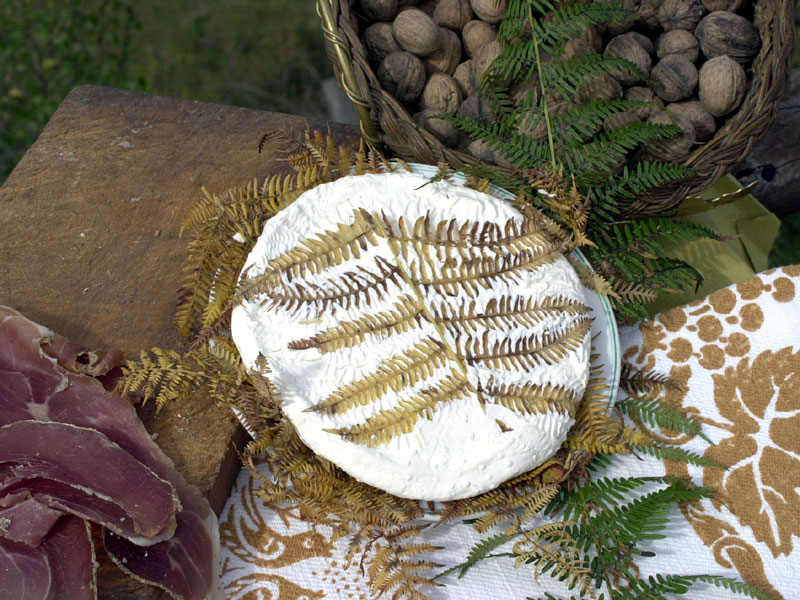
| Raviggiolo History In 1515, the Magistracy of Bibbiena lands' Community gave as a gift to
Pope Leone X some raviggioli, presented in a basket covered
with ferns: this is the first historical evidence of this cheese, fruit of its
production with rennet without breaking. Artusi, in his "Manuale
pratico per le famiglie..." includes cacio raviggiolo among the
ingredients used to make cappelletti of Roma... >> | |
| Cheese | |
| Raviggiolo This rare and ancient dairy product is produced in some valleys of the Apennines in Romagna. It is made with cow's raw milk and rennet, without breaking the curd but only draining the cheese and salting it on the surface. It has a slightly buttery consistency, a white and soft texture with a very delicate taste, almost sweet. It has a round shape of about 20, 25 cm of diameter and a side going... >> | |
| Fruit | |
| Mugello Chestnut (or Marrone) History The first news about Mugello chestnut (or marrone) date back to the Roman Age. However, it became particularly important in the economy of the early Middle Ages, to the extent that it was quoted in
the registers of the Florence Toll already in the 14th century. The Florence Land Register talks about Mugello as a land with "...great
abundance of big and fine chestnuts...". At the end of t... >> | |
| Fruit | PAT | | Regina di Londa Peach History
Regina di Londa peach has unknown origins. The first
information about it date back to the 1950s, when it was accidentally
discovered by Alfredo Leoni from Londa: after analyzing its features,
he understood the commercial importance it could gain as a late
cultivar. An abundant blooming completed by an excellent fructification
and a good resistance to the oidium (a pathogenic fungus ... >> | |
| Honey | | | Fir Tree Honeydew Current Production Area in the Park Bagno di Romagna, Bibbiena, Chiusi della Verna, Poppi, Pratovecchio, S. Sofia, Stia.
Description It has a dark brown color, almost black with green reflections; if it
is pure, it undergoes a very slow crystallization process. Its
taste is sweet, aromatic, and the balsamic features deriving from its
richness in resins can be immediately appreciated.
Product ... >> | |
| Honey | |
| Honey History Without a doubt, describing the history of honey is not that easy. As a
matter of fact, honey was born with bees, and the merit of man only consists of the discovery of its particular features. Over the centuries,
the techniques to make the most of its exploitation have been improved.
In the 4th century BC, Aristotle already described bee-keeping techniques: how to keep these tireless "... >> | |
| Autochthonous Breed and Meat | |
| Chianina Cow Breed History Chianina cow breed is without a doubt one of the most important and
ancient breed in Italy. It has been named after its area of origin,
Val di Chiana, situated between Tuscany and Umbria. The Romans and the
Etruscans used big and white cows in their triumphal processions or for
the sacrifices to their gods. Sculptures of bulls dating back to that
period have somatic features very simi... >> | |
| Autochthonous Breed and Meat | |
| Romagnola Breed History "It was not created in a while, nor it came out perfect as Minerva did from
the head of Jupiter, but it is the result of the patient, clever, and
passionate work of a group of breeders who, for half a century, have taken care
of it...": in 1930, Dino Sbrozzi describes with these words Romagnola cow breed. In 1975, Alberto Silvestri told
its wonderful history. Coming from China (from th... >> | |
| Autochthonous Breed and Meat | |
| Romagnola Cow Breed
Romagnola cow is considered one of the most resistant cows to the climate among white cows: its adaptability to difficult lands makes it an ideal grazing animal that do not stand stall housing. Its milk is used for the calves weaning only, since this cow is used for its meat: it is butchered between the 11 and 18 months, when it weights 6-700 kilos. Given its features, it is bred in the pastures... >> | |