(837m above sea-level)
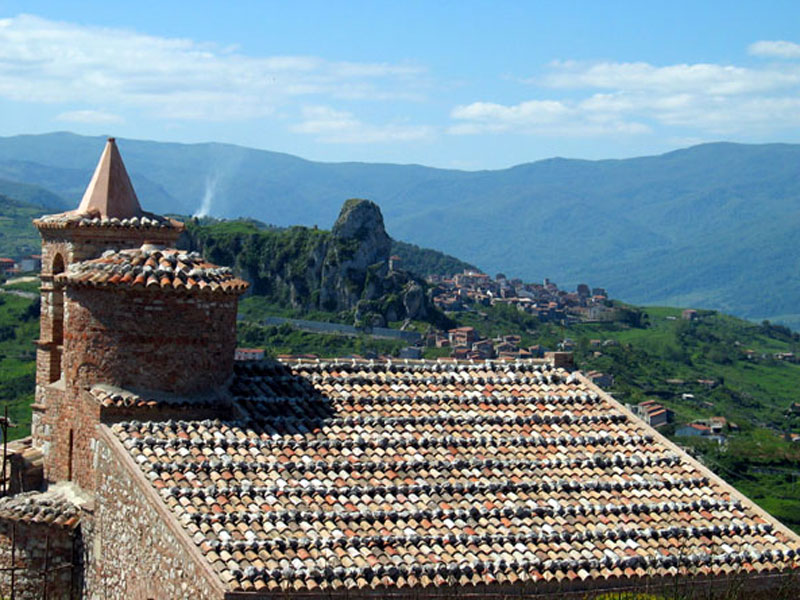
Better known under the name of "Casina di
pietratagliata", it is a single noble elegant building, made by
stone-cutters masters with squared stone blocks. It is a good example
of the building typology of the beginning of the century. It is
surrounded by a Turkey oak wood.
(1,025m - 1,063m - 1,209m above sea-level)
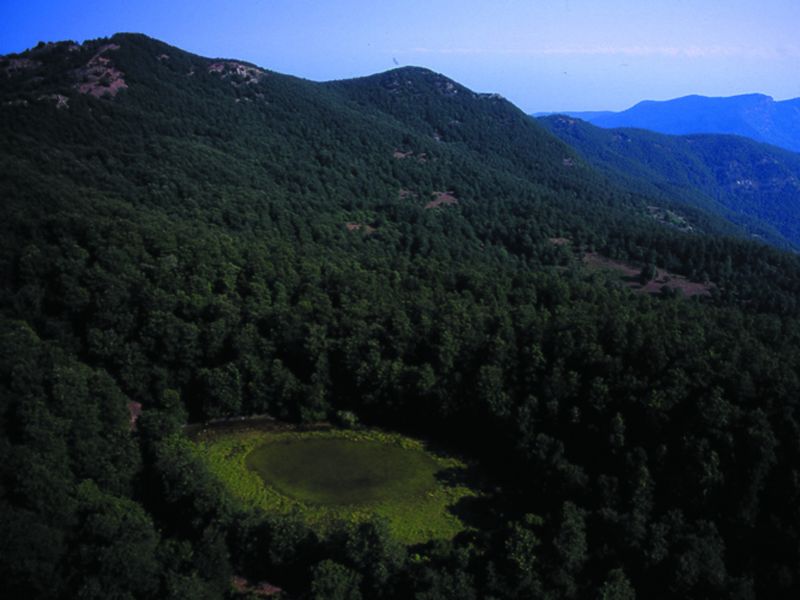
The presence of the ilex
in this area of the Municipality of San Fratello is doubly surprising:
first, because this species in the Nebrodi never forms so extended
top-soils (about 250 hectares), even if it is sporadically frequent;
second, the altitude progression is characterized by a singular
phenomenon called by botanists "vegetational inversion"; as a matter of
fact, the ilex wood can be found at an altitude which is unusually high
for its species, and higher than the one of the Turkey oak wood.
(1,400m above sea-level)
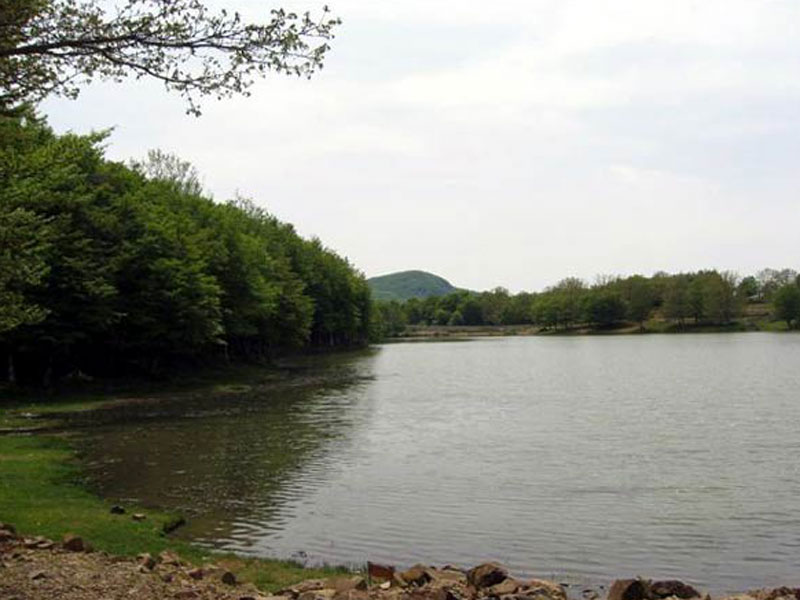
Situated on the north-eastern slopes of
Mt. Soro, it is an artificial basin of about 5 hectares
built in the 1980s by "Amministrazione Forestale della Regione"
(Regional Forest Administration). Set in the wonderful Sollazzo Verde
beech woodland, it has become particularly important for its naturalistic
aspects and for its landscape.
(1,847m above sea-level)
It is the highest peak of the Nebrodi. You
can reach it through an asphalt road from the junction of Portella
Femmina Morta (1,524m a.s.l.) and it is situated along the road S.S.
289 S.Fratello – Cesarò. From the peak of the very green Monte Soro you
can enjoy a large and unforgettable view: in the north, the Tyrrheanian
coast and the Aeolian islands; in the east, Serra del Re hiding the
view of the Peloritani; in the south-east the imposing profile of Etna
degrading towards Simeto valley; in the south the mountain chain of
Monti Erei and, in the west, Madonie. During a hike to Mt.
Soro, you must visit the monumental Mountain Maple, one of the biggest
in Italy (22m of height, and about 6m in diameter).
(1,278m above sea-level)
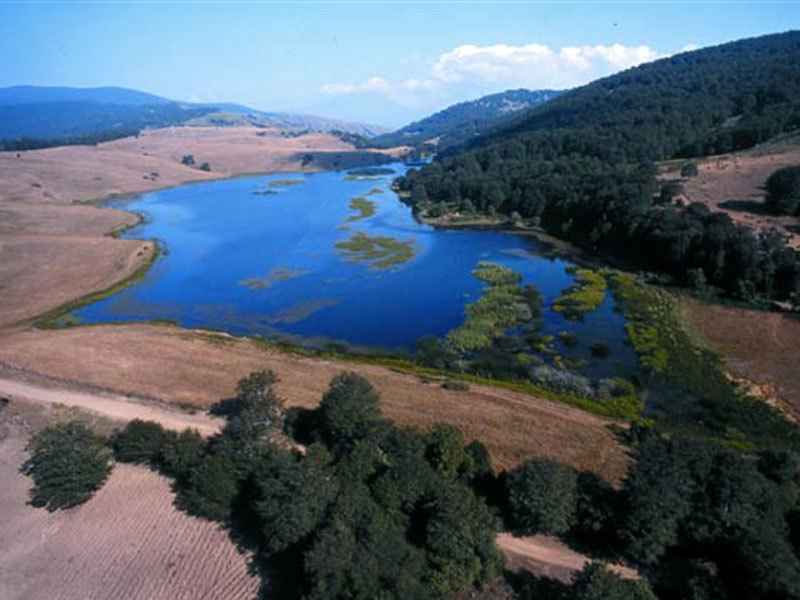
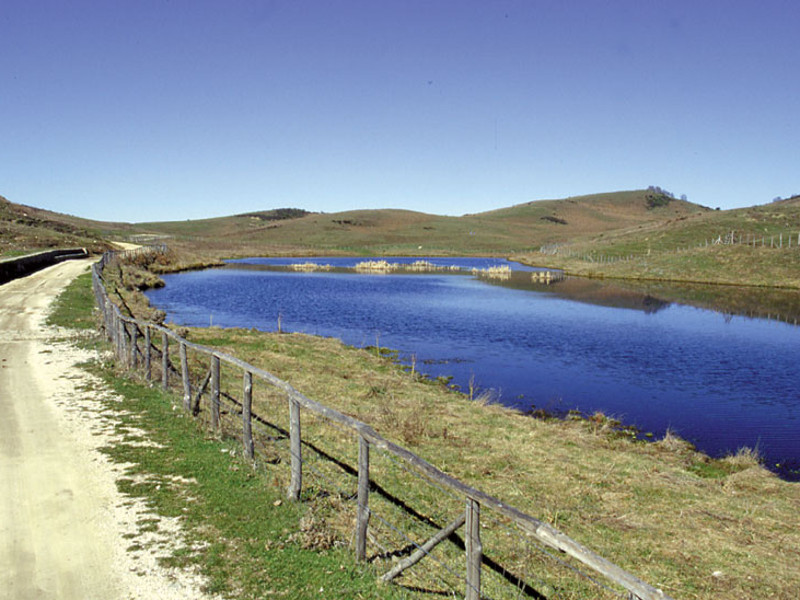
The lake is situated within the
Municipality of Cesarò and has a surface of about 18 hectares. It is
the most valuable high mountain wetland in Sicila from a naturalistic
point of view, but also for the particularity of its vegetal and animal
population. The very rich flora is influenced by the periodical
variations of the water level determining a horizontal zonation of the
vegetation, which can be divided into six strips, according the various
dominating species. Moreover, the presence of water in a mountain area
covered with beech woods represents a privileged reference point for
the life of several aquatic bird species, as well as for the stopover
of migratory birds. A natural phenomenon which is worth noting: in
summer, the water of the lake turns red because of the blooming of a
micro algae called Euglena sanguinea.
Besides the naturalistic interest, the lake combines panoramic values:
indeed, it is surrounded by impenetrable populations of hydrophilous
plants and dominated by imposing beeches, opening in the north to
wonderful settings.
These are places of extraordinary beauty and charm, mainly belonging to
the territory of the Municipality of Longi and to the Municipality of
Bronte. At lower altitudes, these areas are characterized by ancient
Turkey oak woods, with some remarkable specimens, whereas at higher
altitudes there are thick and imposing beech woods, mixed to Maples,
Ash trees, Holly shrubs, Yews, Wild pears, and Crab trees.
The
riparian vegetation along the several watercourses is very rich. All
across the wood, which can be reached from Longi and Galati Mamertino,
through Portella Gazzana (979m), there are amazing panoramic points
and the possibility to go hiking.
(1,315m above sea-level)
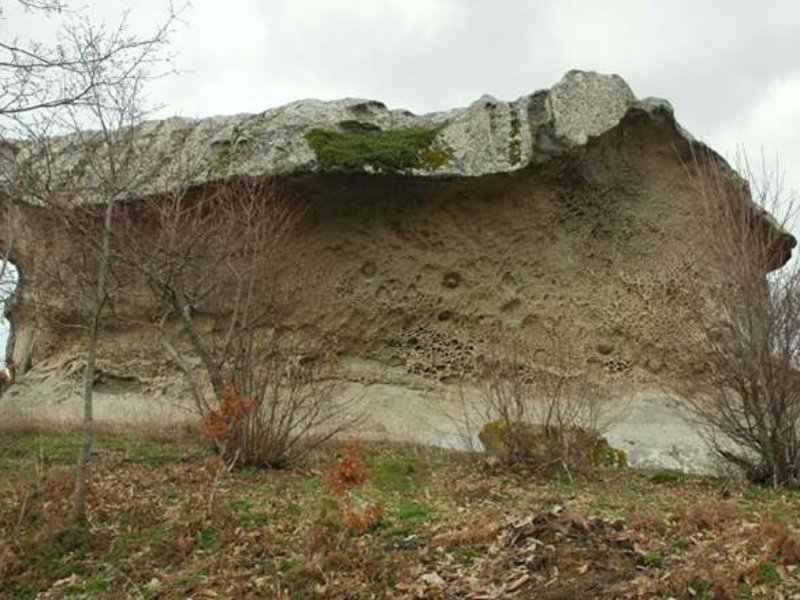
Rocky formations of calcareous nature,
with deep fissures, situated within the territory of the Municipalities
of Alcara Li Fusi, Longi, and S.Marco d'Alunzio. Several species of
great birds of prey build their nests on these harsh and inaccessible
architectures. Gorgeous panoramas open up on the summit.
The Municipalities whose territory is part of the protected area are 24:
According to the census carried out in 2001, these Municipalities are populated by a total of 96,532 inhabitants with an average population density of 56.5 inhabitants every 2 km.
Further information