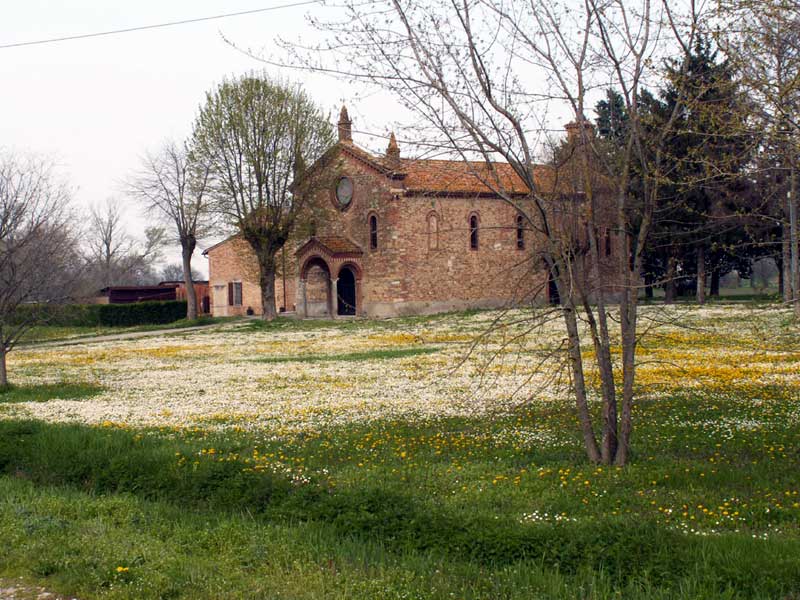
The church is situated along the road leading to the homonymous location and then to Scipione Ponte and Vigoleno, in a central position in the Park and near the area of the stream known as "Le Cascatelle". It dates back to the 9th century and was built between the years 880 and 885 to welcome the relics of the Saint who was martyrized in Rome. Unfortunately, a few years later (probably already in 913) the martyr's relics were moved to an altar of the cathedral of Parma. Already known since the 7th century, the place was the destination of an important pilgrimage linked to the therapeutic virtues ascribed to the water of the spring Fonte Broccola (meaning "overflowing"), used to treat headaches. According to the legend, the pilgrims used to come from all over Europe (according to the tradition on 1st June) with a stone on their head and were healed by a sip of water from the spring. Always according to the tradition, the church was built with the stones by the pilgrims had brought over the centuries near the spring: the building is characterized by stones of various origins, although most of them come from the adjacent area, as demonstrated by their abundant content in fossils. The spring was then channeled in the well that is situated in the crypt, probably of Roman origin: on the edges of the well you can still see the furrows created the by rope sliding of the buckets used to take water from the well. The church is a rare example of Carolingian building preserved till present times; outside, the building is very simple and completed by a small bell tower.