Points of Interest
The Territory, Flora, and Fauna
The territory of Nera River Park has a mainly
longitudinal course: it is crossed by the middle - lower course of the
river Nera for about 20 kilometers and is characterized by a narrow
valley bottom dominated by high mountains covered with woods.
Its
flora is diversified: olive groves along the whole piedmont strip and
part of the mountain area; broadleaf trees on the steep mountain
slopes; herbaceous species, above all Graminaceae suitable for the
spring pasture of cattle and sheep, on the highest mountains; arboreal
and shrubby species of the Mediterranean maquis - ilex trees (Quercus ilex), Aleppo pines (Pinus halepensis), and Strawberry trees (Arbutus unedo) - in the woods. A very rare and endemic species is Ephedra major or Ephedra nebrodensis,
an example of surviving flora of the Tertiary Age, with only a few
stations in Italy, among which the most recess rocky areas of the Park.
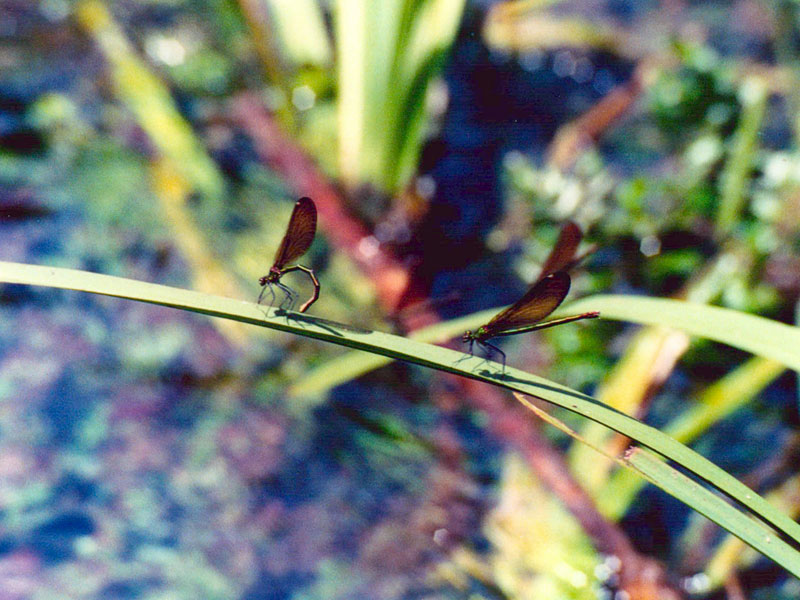
The fauna can be divided in two categories: the fauna of the watercourses, among which the brown trout (Salmo trutta fario), and the mountain fauna including several birds of prey, like the Short-toed Eagle (Circaetus gallicus) and the Kestrel (Falco tinnunculus) and, in the most inaccessible and lonely areas, the wild cat (Felis silvestris) and the pine marten (Martes martes).
There are thousands of bats (Rhinolophus ferrumequinum) which, during the winter, find shelter in the caves of Marmore Waterfall.
Points of interest from South to North
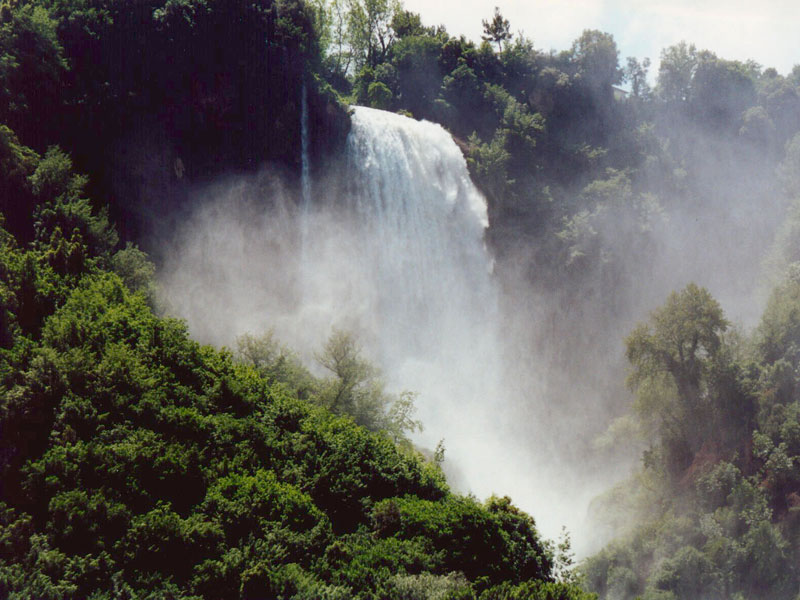
1) Marmore Waterfall (Terni)
The Marmore Waterfall is an artificial fall coming from the river Velino, which after a 90-km-long course and after crossing the last stretch of the Reatina valley and a travertine terrace, falls in the river Nera, which runs across the valley below.
- Further information (Italian text)
2) Documentation Center of the Nera River Park (Collestatte - Terni)
With the contribution of the C.I.A.V (Centro Iniziative Ambiente Valnerina - Center for Environmental Initiatives of Valnerina) the Documentation Center of the River Nera Park's Natural Protected Areahas been established in Collestatte, and it includes the ornithological and mycological sections as well.
- Further information (Italian Text)
3) Canoe center of Arrone (Arrone)
4) Archaeological site of Tripozzo (Arrone)
5) Archaeological site of Monte Moro (Montefranco)
6) Apennine Museum (Polino)
7) Astronomical Observatorium (Polino)
8) Colle Bertone, la Pelosa, Prato Manente, Fonte dell'acqua Viva (Polino)
- Picnic areas, Hikes - CAI;
9) Sport Climbing (Ferentillo)
10) Mummies Museum (Ferentillo)
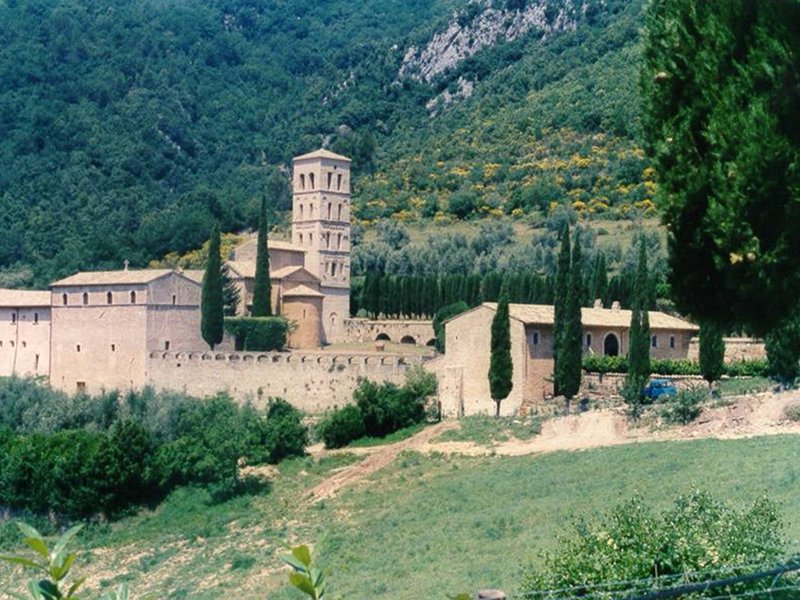
11) S. Pietro in Valle Abbey (Ferentillo)
Galleto Hydroelectric Power Station
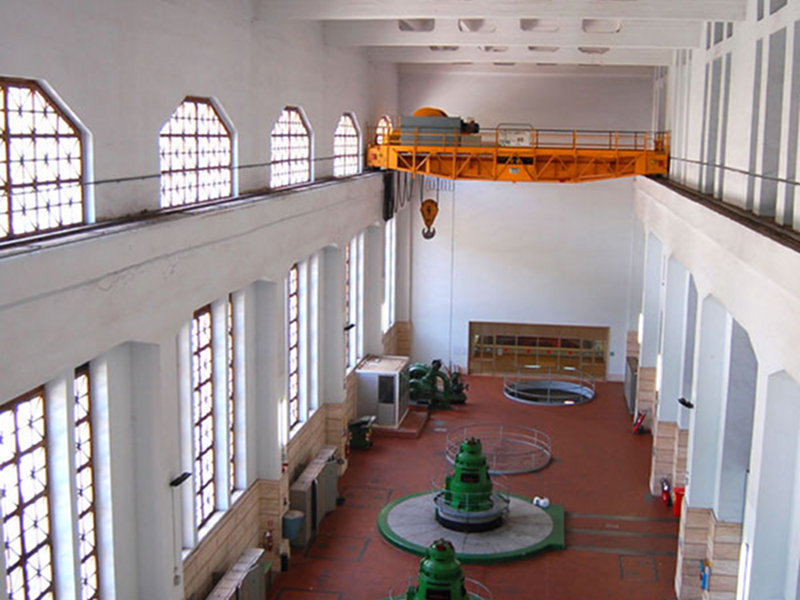
Galleto Hydroelectric Power Station was built by "Società Terni per
l'Industria e l'Elettricità", according to a project by the Architect
Cesare Bazzani, to meet the growing need of electric energy by the
industry of Terni, in particular by the arms industry, and was
inaugurated in 1929.
During World War II, the Allied Forces tried
more than once to destroy it and, in June 1944, the retreating Germans
blew it up.
At the end of 1945, the 4 production units had been restored.
After 1962, the power station was nationalized and became part of Enel,
which in 1973 doubled them with Monte Sant'Angelo power station.
In 2001, "Società Endesa Italia" of ENDESA Group purchased from Enel
all the hydroelectric power stations of the Nucelus of Terni, for which
today Galleto power station together with the annexed Monte Sant'Angelo
power station, produces about the 50% of the total energy.
Galleto power station is supplied by the waters of Nera-Velino system,
flowing from Piediluco basin through the so-called "Drizzagno" channel.