Points of Interest
History
Trasimeno area was inhabited by the Etruscans, whose presence is witnessed by several evidences (graves), above all in the surroundings of Castiglione del Lago; the territory, like the rest of Umbria, was then conquered by the Romans.
It is thought that the Romans created the first lake's effluent to regulate its water level.
On the lake shores, the famous Trasimeno battle took place: the Romans were defeated by Hannibal in 217 BC.
Thanks to the Romans the Trasimeno area acquired a great economic interest due to the development of a fertile agriculture and to the richness determined by the fishing activities.
A Roman villa was found in Quarantaia. The excavations have brought to the light the walls of a country-style residence dating back to the 1st-2nd century AD, some pools, and a kiln.
Further information (Italian Text)
Archaeology
Trasimeno - A 20,000 year old history
During prehistoric and proto-historic times, Trasimeno Lake was characterized by human settlements. Already at the end of the Paleolithic Age, groups of hunters chased their preys on its shores, leaving traces of their passage in one of the most ancient sculptures in the round: "Trasimeno Venus". After millennia, the same shores experienced the presence of the most ancient Umbrian Neolithic settlements dating back to the 5th millennium BC. Navigating the lake with their pirogues (whose structure we can reconstruct thanks to the clay models found during the excavations), these very ancient communities used to integrate the resources of the first forms of agriculture with fishing.
In later times, during the early, middle and late bronze age (between the 24th and 12th century BC) other housing structures were built on the lake shores and waters, as it is shown by some findings at the San Savino Oasis, where after some drainages hundreds of rests belonging to a built-up area consisting of wooden stilt houses were found: this is the only one area of this kind known in the whole Province of Perugia which has to be located through underwater and geological surveys.
Further information (Italian text)
The Museums
The presence of man in Trasimeno area has very ancient origins. As a matter of fact, Trasimeno has always represented an endless source of maintenance for fishing, a particularly rich agriculture thanks to the presence of water, and the abundance of game. Etruscans and Romans gave birth to important towns on its shores; evidences can be found in the area. However, Trasimeno is recalled for the homonymous battle that was fought on 24th June 217 BC between Hannibal and the Consul Flaminio, with huge Carthaginian and Roman troops in the north of the lake, which ended with a terrible massacre: the Romans lost over 15,000 soldiers, including their commander.
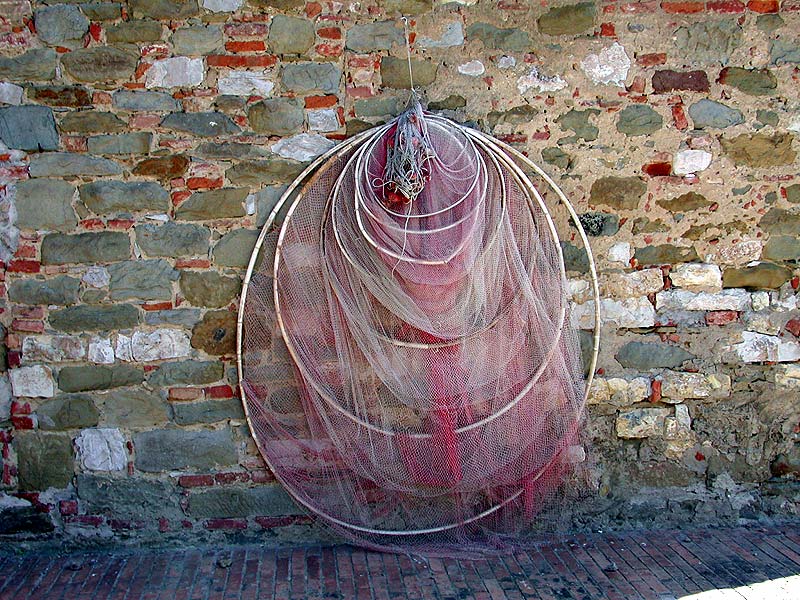
The Trasimeno area is also a land of fishermen and ancient local traditions such as the manufacturing of lace and tulle.
We can admire ll these testimonies in the villages, the islands and especially in the museums of the territory.
Sport
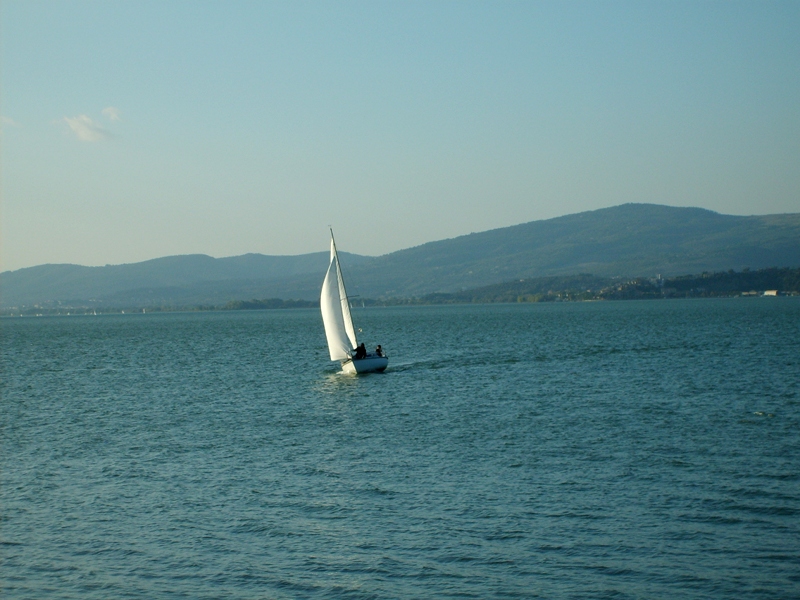
In Trasimeno Park, the sports you can practice are linked to the territory morphology and to several and efficient facilities. Sailing is practiced everywhere, thanks to the favorable conditions the lake offers. The activity is supported by the presence of sailing clubs organizing specialization courses for children and adults, canoeing and kitesurfing.
A long trail network favors trekking and horse riding and gives the opportunity, at the same time, to reach on foot, on horseback, and by mountain bike all the hills surrounding the lake and therefore the several historical town centers, the villages, and castles.